235
00DH
470.00 DH
-50%
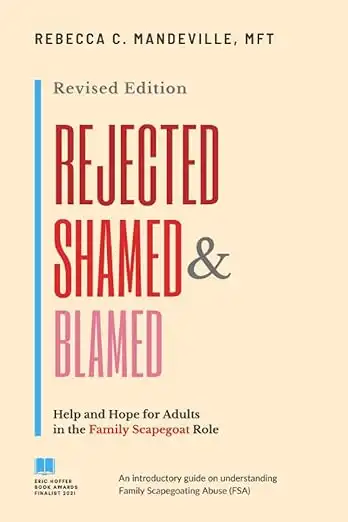
Rejected, Shamed, and Blamed: Help and Hope for Adults in the Family Scapegoat Role
Livraison
DétailsFrais de livraison à partir de :
Livraison entre le Mercredi 9 septembre 2026 et le Jeudi 10 septembre 2026
À propos de cet article :
Marque : GENERIC
Vendu par HEAVENBOOKS.MA
Therapist Recommended: Family scapegoating is an insidious form of "invisible" abuse that is difficult to recognize. It is therefore critical that adult survivors of dysfunctional or narcissistic family systems understand what type of abuse they are trying to recover from. In Rejected, Shamed, and Blamed, Licensed Psychotherapist and Family Systems...
Partagez ce produit
1
Mode de paiement
Paiement par carte bancaire
Carte marocaines
Paiement à la livraison
Paiement en espèce à la livraison
Politique de retours
Note de politique de retour
 Produits 100% authentiques
 Livraison partout au Maroc
 Satisfait ou remboursé
 Offre nationale et internationale
Description produit
- Marque
- GENERIC
- Titre
- Rejected, Shamed, and Blamed: Help and Hope for Adults in the Family Scapegoat Role
- Éditeur
- Independently published
- Type de produit
- paperback
- Présentation du livre
- paperback
- Date de sortie
- 9/28/2020 12:00:00 AM
- Langue d'origine
- English
- ISBN
- 9157221901
- Nombre de pages
- 149 pages
- Langue
- English
- Résumé
- Therapist Recommended: Family scapegoating is an insidious form of "invisible" abuse that is difficult to recognize. It is therefore critical that adult survivors of dysfunctional or narcissistic family systems understand what type of abuse they are trying to recover from. In Rejected, Shamed, and Blamed, Licensed Psychotherapist and Family Systems expert Rebecca C. Mandeville uses her research findings on what she named 'Family Scapegoating Abuse' (FSA) to help survivors recognize and release the damaging 'scapegoat' narrative associated with the family 'identified patient' role. This 2nd revision includes additional recovery suggestions, and updated resources. Also suitable for concerned friends and clinicians.In these pages you'll discover:The FSA Self-Assessment TestHow to recognize and identify family scapegoating abuse (FSA) signs and symptomsWhy scapegoated individuals have difficulty recognizing they are being abusedHow complex trauma (C-PTSD), betrayal trauma, and toxic shame impede FSA recoveryHow intergenerational trauma and false narratives fuel family scapegoating dynamicsWhy the family 'Empath' can end up scapegoatedStrategies to reduce fawn/submit behaviors and realign with your 'true self'Recommended resources and therapy modalities for FSA recoveryFrom the Author: "Scapegoating in any social system is a dehumanizing process of 'othering'. When you are the target of scapegoating in your family-of-origin, the consequences to your mental and emotional health can be severe, including the development of complex trauma (C-PTSD) symptoms. This introductory guide's purpose is to help the reader determine if they are in the 'family scapegoat' role while educating on family scapegoating dynamics and the devastating consequences of being 'rejected, shamed, and blamed' by the people who were supposed to love and care for them the most."Rebecca C. Mandeville is a licensed Marriage, Family Therapist, Certified Complex Trauma Professional, and recognized Family Sy
- Auteur
- Rebecca C Mandeville MFT
- Date de parution
- 9/28/2020 12:00:00 AM