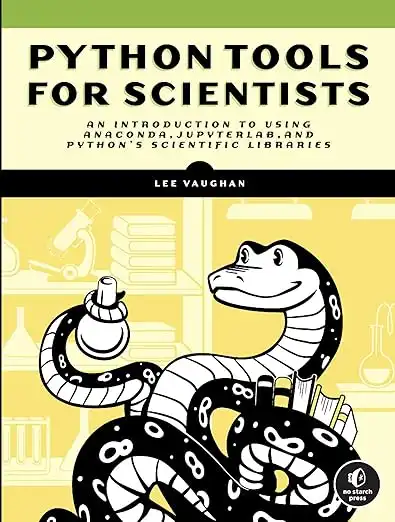
Python Tools for Scientists : Guide d'introduction à Anaconda, JupyterLab et aux bibliothèques scientifiques - Marjane Mall - Image 1
220
00DH
300.00 DH
-27%

Python Tools for Scientists : Guide d'introduction à Anaconda, JupyterLab et aux bibliothèques scientifiques

Livraison

Détails
Frais de livraison à partir de :
Livraison entre le Mercredi 9 septembre 2026 et le Jeudi 10 septembre 2026

À propos de cet article :

Marque : GENERIC
Vendu par HEAVENBOOKS.MA

Découvrez comment exploiter la puissance du langage Python pour vos recherches, simulations et analyses de données avec cet ouvrage complet de Lee Vaughan. Ce livre de 744 pages vous guide pas à pas dans la création d'un environnement de travail optimal en utilisant Anaconda, JupyterLab et Spyder, tout en explorant les bibliothèques incontournables...

1

Mode de paiement

Paiement par carte bancaire
Carte marocaines

Paiement à la livraison
Paiement en espèce à la livraison
Politique de retours
Note de politique de retour

Description produit

Marque
GENERIC
Titre
Python Tools for Scientists: An Introduction to Using Anaconda, JupyterLab, and Python's Scientific Libraries
Éditeur
No Starch Press
Type de produit
Paperback
Présentation du livre
Paperback
Date de sortie
1/17/2023 12:00:00 AM
Langue d'origine
English
ISBN
1718502664
Nombre de pages
744 pages
Langue
English
Résumé
An introduction to the Python programming language and its most popular tools for scientists, engineers, students, and anyone who wants to use Python for research, simulations, and collaboration.Python Tools for Scientists will introduce you to Python tools you can use in your scientific research, including Anaconda, Spyder, Jupyter Notebooks, JupyterLab, and numerous Python libraries. You’ll learn to use Python for tasks such as creating visualizations, representing geospatial information, simulating natural events, and manipulating numerical data.Once you’ve built an optimal programming environment with Anaconda, you’ll learn how to organize your projects and use interpreters, text editors, notebooks, and development environments to work with your code. Following the book’s fast-paced Python primer, you’ll tour a range of scientific tools and libraries like scikit-learn and seaborn that you can use to manipulate and visualize your data, or an*lyze it with machine learning algorithms.You’ll also learn how to:Create isolated projects in virtual environments, build interactive notebooks, test code in the Qt console, and use Spyder’s interactive development featuresUse Python’s built-in data types, write custom functions and classes, and document your codeRepresent data with the essential NumPy, Matplotlib, and pandas librariesUse Python plotting libraries like Plotly, HoloViews, and Datashader to handle large datasets and create 3D visualizationsRegardless of your scientific field, Python Tools for Scientists will show you how to choose the best tools to meet your research and computational an*lysis needs. Read more
Auteur
Lee Vaughan
Date de parution
1/17/2023 12:00:00 AM