220
00DH
300.00 DH
-27%
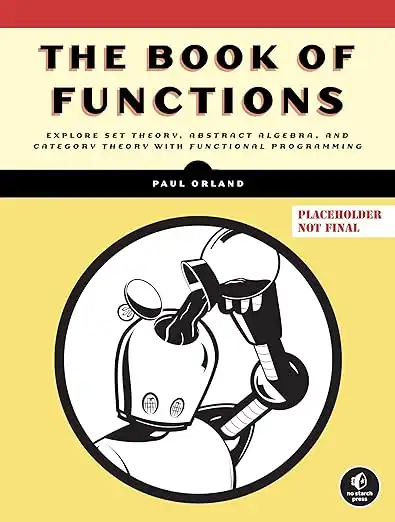
The Algebra of Code, Volume 1: Explore Set Theory, Abstract Algebra, and Category Theory with Functional Programming
Livraison
DétailsFrais de livraison à partir de :
Livraison entre le Lundi 26 octobre 2026 et le Mardi 27 octobre 2026
À propos de cet article :
Marque : GENERIC
Vendu par HEAVENBOOKS.MA
A hands-on, exercise-driven guide that teaches functional programming and real mathematics — set theory, abstract algebra, and category theory — together, using more than 500 short coding exercises in F#.Category theory, abstract algebra, and set theory aren't just academic abstractions — they're the mathematical backbone of functional programming ...
Partagez ce produit
1
Mode de paiement
Paiement par carte bancaire
Carte marocaines
Paiement à la livraison
Paiement en espèce à la livraison
Politique de retours
Note de politique de retour
 Produits 100% authentiques
 Livraison partout au Maroc
 Satisfait ou remboursé
 Offre nationale et internationale
Description produit
- Marque
- GENERIC
- Titre
- The Algebra of Code, Volume 1: Explore Set Theory, Abstract Algebra, and Category Theory with Functional Programming
- Éditeur
- No Starch Press
- Type de produit
- Paperback
- Présentation du livre
- Paperback
- Langue d'origine
- English
- ISBN
- 1718501609
- Nombre de pages
- 648 pages
- Langue
- English
- Auteur
- Paul Orland
- Date de parution
- 10/20/2026 12:00:00 AM